

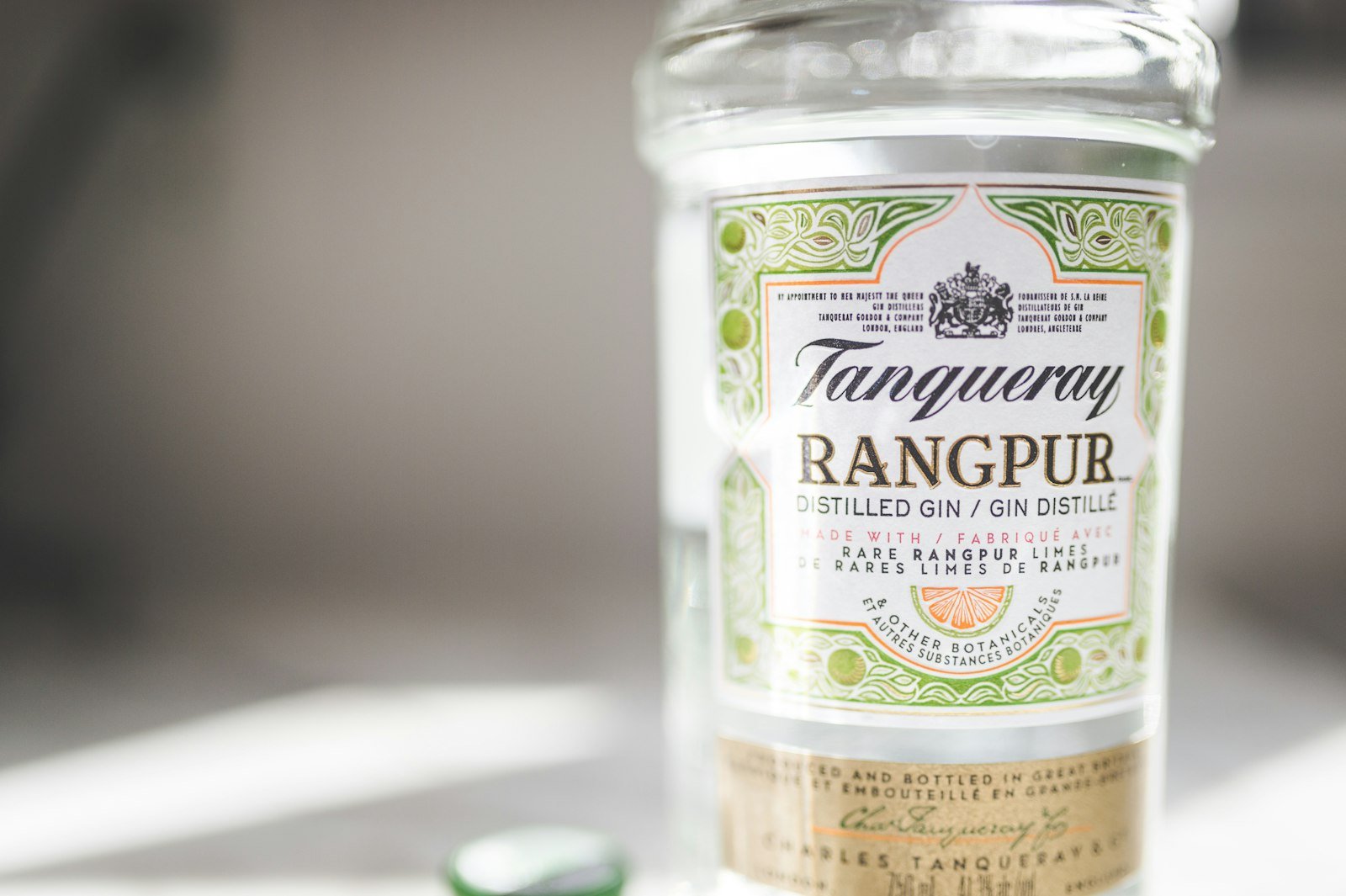
The smell hits before the sip does. Juniper, resinous and clean, with a faint citrus edge that sharpens the air around the glass. These are the tasting notes that matter before a drop touches your tongue, and with Tanqueray London Dry, the nose alone tells you something precise is about to happen.
Tanqueray has been distilled in Britain since the 1830s, originally at the Bloomsbury distillery founded by Charles Tanqueray. The recipe has changed very little since then, which is either a mark of stubbornness or genius depending on your perspective. It’s genius. The formula centres on four botanicals: juniper, coriander, angelica root, and liquorice root. That restraint is deliberate. Where many contemporary gins reach for complexity through volume, adding petal after petal to the botanical bill, Tanqueray achieves balance through precision. It is distilled at a high proof before being brought down to bottling strength, which concentrates the aromatics without roughening the spirit. The result is one of the most consistent, benchmarkable expressions in the gin and spirits category.
What the Glass Shows: Clarity, Colour, and Viscosity
Tanqueray London Dry is crystal clear with just the faintest silver tint under light. There’s no haze, no cloudiness. It’s exactly what you’d expect from a spirit that prides itself on technical precision. At 40% ABV for the standard New Zealand bottle (a 47.3% version is also sold), the legs move slowly down the glass with a light, watery viscosity rather than an oily weight. This is a gin that doesn’t try to look like something it’s not.
The Nose: Juniper First, Then Everything Else
Juniper leads without apology. It’s the pine-forward, almost camphor-like quality that defines the London Dry style and Tanqueray does it with more clarity than almost anything at this price point. Beneath that, fresh coriander seed brings a faint lemony warmth. There’s a dry earthiness from the angelica root, like damp stone or a root cellar in winter. The liquorice is subtle, barely there, but it rounds the nose so that the juniper doesn’t become sharp or medicinal.
It’s a focused nose. Not complex in the way that something like Hendrick’s Gin reaches toward rose and cucumber, but authoritative in a way that only restraint can produce.
On the Palate: Four Botanicals, Fully Accounted For
The entry is immediate and dry. Juniper again, but now joined by a peppery bite that comes from the spirit strength rather than any specific botanical. Mid-palate, the coriander opens up as a soft citrus warmth, almost like dried lemon zest over a herbal base. There’s a slight sweetness here, not from sugar but from the spirit itself, and it provides enough cushion to keep the gin approachable rather than austere.
The texture is clean and medium-bodied. It doesn’t coat the mouth the way a navy-strength gin would, but it’s not thin either. This balance is part of why Tanqueray works so well in cocktails. It integrates rather than dominates, though it’s assertive enough that it doesn’t disappear under tonic.
If you’re developing your palate and experimenting with how to taste wine or spirits more analytically, Tanqueray is a useful reference point. The botanical structure is clear and legible, which makes it easier to identify individual elements than in a more layered or floral expression. Practising how to taste wine builds the same vocabulary you’ll use here: isolating components, tracking development across the palate, noticing what lingers.
The Finish: Dry, Long, and Quietly Confident
The finish is long for a gin at this price. Dry juniper persists, with a faint anise note from the liquorice root that emerges only at the end, almost as an afterthought. There’s a gentle warmth from the alcohol that fades cleanly without any burn or bitterness. And then it’s done. No fuss. Just that dry, slightly piney aftertaste that invites another sip.
At the Table: Three Dishes That Work
For food pairings, Tanqueray’s dry juniper character is the key. These three dishes lean into it rather than against it.
Cured salmon with capers and crème fraîche. The salt and acid of the cure mirror the gin’s dryness, while the fat from the crème fraîche softens the spirit’s assertive edge.
Blue cheese and walnut on sourdough. Bold flavours that meet the gin head-on. The earthiness of a good Kapiti Kikorangi or Whitestone Windsor Blue echoes the angelica root without overwhelming it.
Grilled asparagus with lemon butter. A seasonal match that works particularly well right now in New Zealand, when local asparagus is at its best. The herbal bitterness of asparagus and the brightness of lemon both amplify the gin’s coriander note.
Who Reaches for This Bottle
Tanqueray London Dry suits anyone who wants a gin that does its job without theatrics. It’s the bottle behind most good home bars, and for good reason. If you’re building a spirits collection at LiquorMe, this is the benchmark you measure others against. If you enjoy exploring what makes one gin different from another, tasting it alongside Haymans London Gin reveals how small differences in distillation approach and botanical sourcing produce distinct personalities within the same style. Or try it next to something like Gin Mare Capri 42.7%, and the difference between the London Dry tradition and a Mediterranean botanical philosophy becomes immediately clear.
If you’ve worked through our tasting notes on the Balvenie DoubleWood 12 and found that kind of structural analysis useful, Tanqueray rewards the same approach. The principles of how to taste wine, whisky, or gin are transferable, and a spirit this legible is a good place to practise them.
Frequently Asked Questions
What makes Tanqueray a London Dry gin rather than just a regular gin?
London Dry is a production category, not a geographical one. It means the botanicals are added during distillation rather than after, no artificial flavourings are used, and sugar addition is tightly restricted. Tanqueray follows this methodology strictly, which is why the spirit tastes so clean and precise rather than sweetened or artificially enhanced.
What’s the best way to serve Tanqueray London Dry?
A classic gin and tonic remains the most revealing serve. Use a good quality dry tonic and a ratio that respects the gin’s strength, around one part gin to two or three parts tonic. Schweppes Dry Ginger Ale is another option if you want a longer, spicier serve that brings out the coriander and pepper notes in the spirit.
How does Tanqueray compare to more floral or contemporary-style gins?
Contemporary gins often use a wider botanical bill and may include florals, fruit peels, or unusual botanicals to create a distinctive character. Tanqueray takes the opposite approach: four botanicals, precisely selected, distilled for clarity. It’s a more austere style, which some find brilliant and others find plain. The honest answer is that neither is better, they’re just doing different things. If you enjoy floral and soft profiles, something like Hendrick’s Gin sits at a very different point on the spectrum.
LiquorMe stocks New Zealand’s finest wines, spirits, beers, and cocktail ingredients. Browse our full range and enjoy courier delivery across New Zealand, free in Auckland on orders over $200. Shop online at https://liquorme.co.nz or call +64 9 590 0020.


